Lymphatic Drainage
Lymphatic Massage
Lymphatic Massage is a specialized therapeutic technique designed to stimulate the lymphatic system, the body’s critical filtration and waste-removal network. The lymphatic system acts as a detoxification highway, transporting immune cells, removing metabolic waste, and maintaining fluid balance throughout the body. Unlike other forms of massage, lymphatic therapy focuses on the gentle movement of lymph fluid, supporting the body’s natural ability to cleanse, repair, and maintain optimal function.
Why It’s Essential in Today’s Lifestyle:
Modern lifestyles—characterized by prolonged sitting, poor posture, high stress, environmental toxins, and processed diets—can impair lymph flow, leading to fluid retention, inflammation, fatigue, and weakened immunity. Regular lymphatic massage helps counter these effects, rejuvenating both body and mind while supporting the systems that rely on efficient fluid movement, including the circulatory, nervous, and immune systems.
How It Works:
Through gentle, rhythmic techniques, lymphatic massage stimulates the movement of lymph fluid through vessels and nodes, enhancing detoxification, fluid balance, and immune function. It improves blood and lymph circulation, supports organ function, and aids in the removal of toxins and metabolic waste, complementing therapies such as movement, yoga, Pilates, and Shiatsu for full-body restoration.
Key Benefits:
Enhances immune system function by facilitating the transport of white blood cells
Reduces fluid retention, swelling, and inflammation
Improves blood and lymph circulation, supporting tissue health and recovery
Promotes detoxification and metabolic waste removal
Reduces fatigue, stress, and mental fog
Supports organ function and overall internal balance
Complements movement therapies, Pilates, Yoga, and Shiatsu, amplifying their restorative effects
Frequency Recommendations:
For maintenance and preventative health, one session every 4–6 weeks is typically beneficial, though those recovering from injury, surgery, or chronic congestion may require weekly sessions initially. Frequency can be tailored according to individual health status and lifestyle factors.
Why the Lymphatic System is Vital:
The lymphatic system is a key component of the body’s internal cleansing and immune network. It works closely with the circulatory system, organs, and all fluid pathways to maintain homeostasis, energy balance, and overall vitality. Supporting this system through regular lymphatic massage ensures the body can efficiently remove waste, reduce inflammation, and maintain optimal function, making it an essential component of any holistic health program.
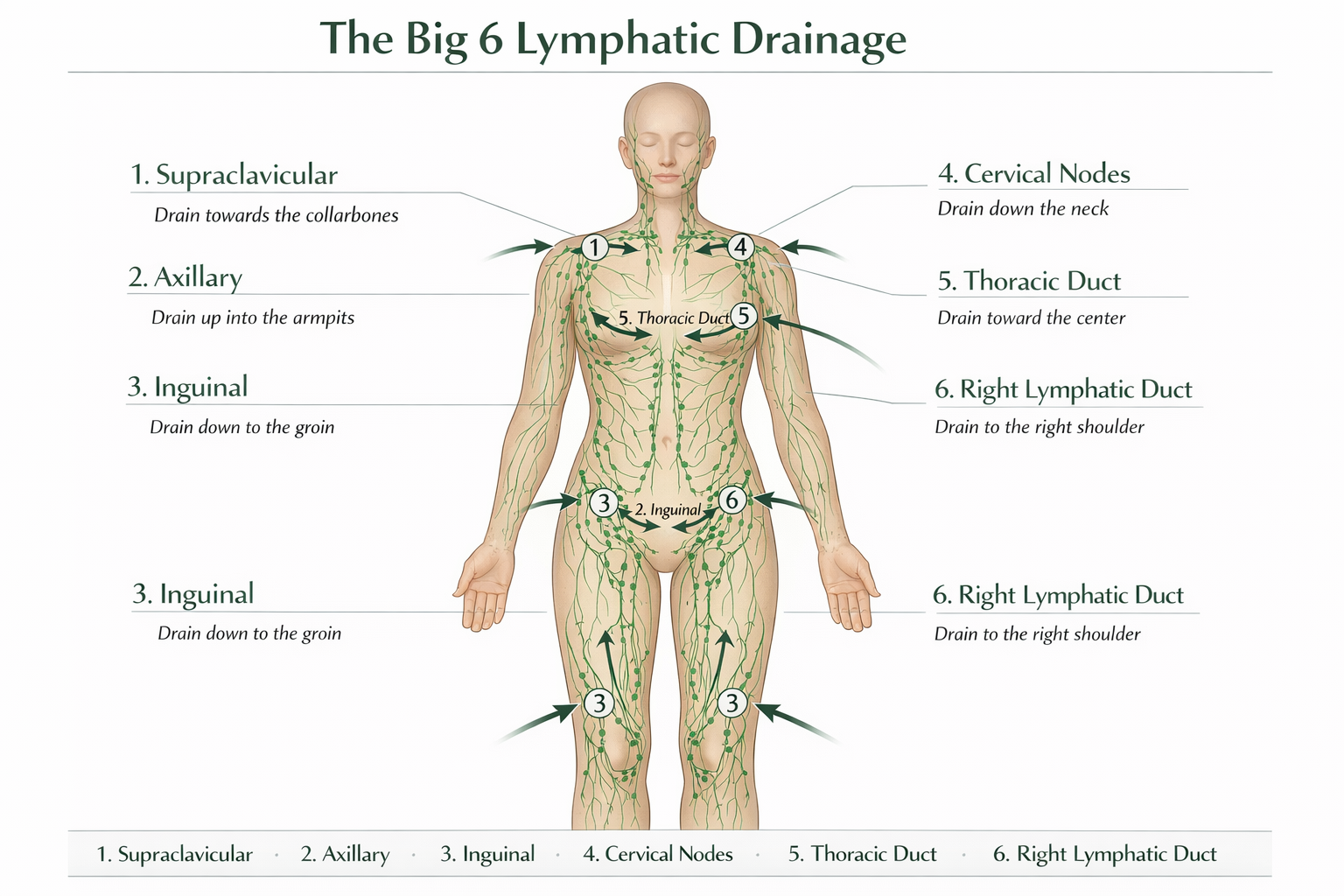
The Big 6 Lymphatic Drainage Pathways
The “Big 6” refers to the major lymphatic regions typically targeted in manual lymphatic drainage (MLD) therapy to encourage fluid movement toward the central venous system. Each area is massaged in a specific direction, following the natural flow of lymph.
1. Supraclavicular Area (Neck/Clavicle)
Purpose: Main drainage for lymph from the head, neck, and upper extremities.
Massage Direction: Light, sweeping strokes toward the clavicles and supraclavicular nodes.
2. Axillary Area (Underarm)
Purpose: Drains lymph from the arms and upper thorax.
Massage Direction: Strokes move upward and inward toward the axillary nodes.
3. Inguinal Area (Groin)
Purpose: Drains lymph from the lower extremities and lower abdomen.
Massage Direction: Strokes move downward and inward toward the inguinal nodes.
4. Cervical/Neck Lymph Nodes
Purpose: Drains head, scalp, face, and neck.
Massage Direction: Gentle strokes move toward the deep cervical nodes along the sides of the neck.
5. Thoracic Duct Area (Central Chest/Upper Abdomen)
Purpose: Central conduit for most lymph from the left side of the body, draining into the venous system near the left clavicle.
Massage Direction: Light strokes move centrally toward the thoracic duct.
6. Right Lymphatic Duct Area (Upper Right Chest/Shoulder)
Purpose: Drains lymph from the right upper body, arm, and thorax.
Massage Direction: Light strokes move toward the right lymphatic duct near the right clavicle.
General Principles for Lymphatic Massage:
Use very light pressure; lymph moves superficially, not deeply.
Always start proximal to distal—clear central nodes first, then move outward.
Massage should be rhythmic and gentle, following natural lymph flow.
Combine the six pathways in a sequence for full-body drainage, often starting with supraclavicular nodes to open central drainage points.
lymph nodes and vessels in green, with neutral-toned body illustration for clarity.